[EXPO 2025 Report] THE RAMENS and the Legacy of Expo
2026.03.10
collaborator
Between August 13 and September 12, 2025, we held our original program “THE RAMENS” a total of seven times at Expo 2025 Osaka, Kansai*.
A total of 82 participants—72 from Japan and 10 from overseas—took part, enjoying encounters with ramen flavors they had never experienced before.
This article looks back on THE RAMENS at Expo 2025 and explores how the project has evolved beyond the event.
*Organized by Fuji Oil / MIRACORE®, THE RAMENS was held at the ORA Dining Pavilion “UTAGE” at Expo 2025 Osaka, Kansai (August–September 2025).
What is THE RAMENS?
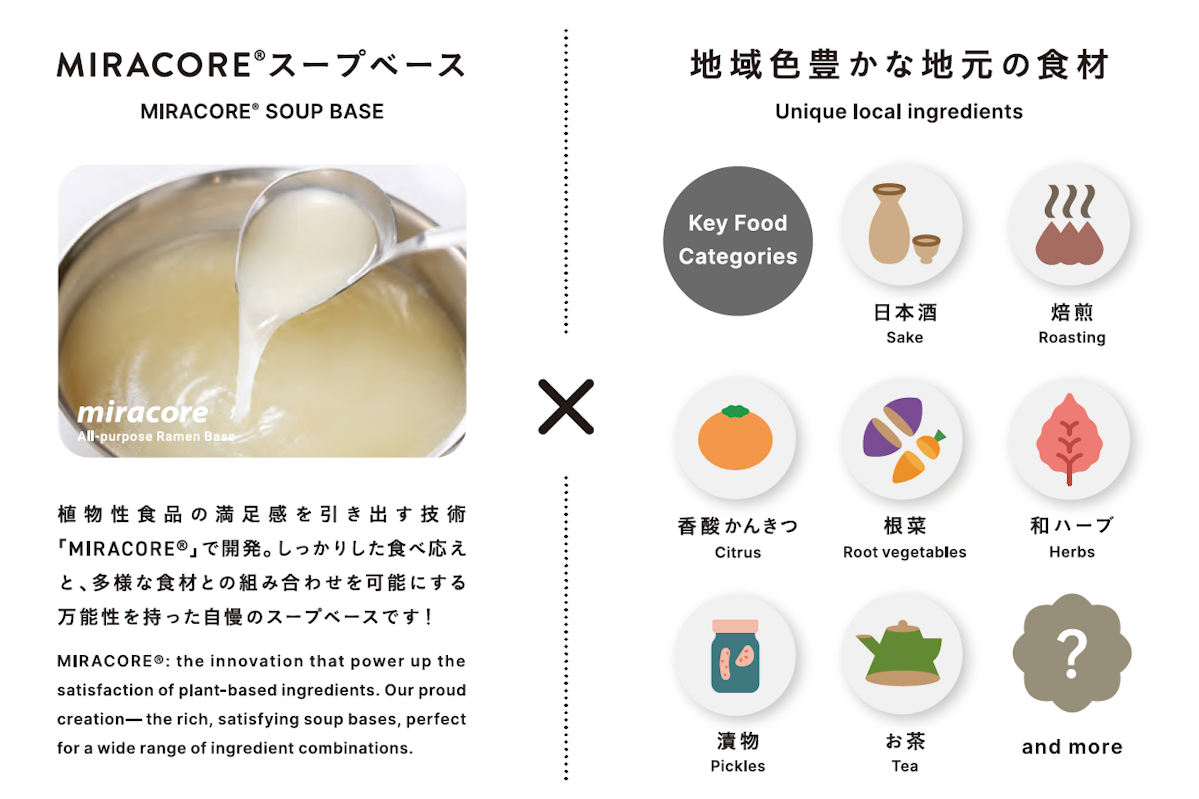
THE RAMENS is a project that explores new food culture and co-creation possibilities by using MIRACORE®’s plant-based soup base as a foundation and transforming unique local ingredients from across Japan into ramen—one of Japan’s most familiar food formats.
Ramen is widely enjoyed not only in Japan but also around the world. While classic styles such as tonkotsu, miso, and soy sauce are well known, this project began with a simple question:
Could ramen be expanded even further by making use of the unique characteristics of plant-based ingredients?
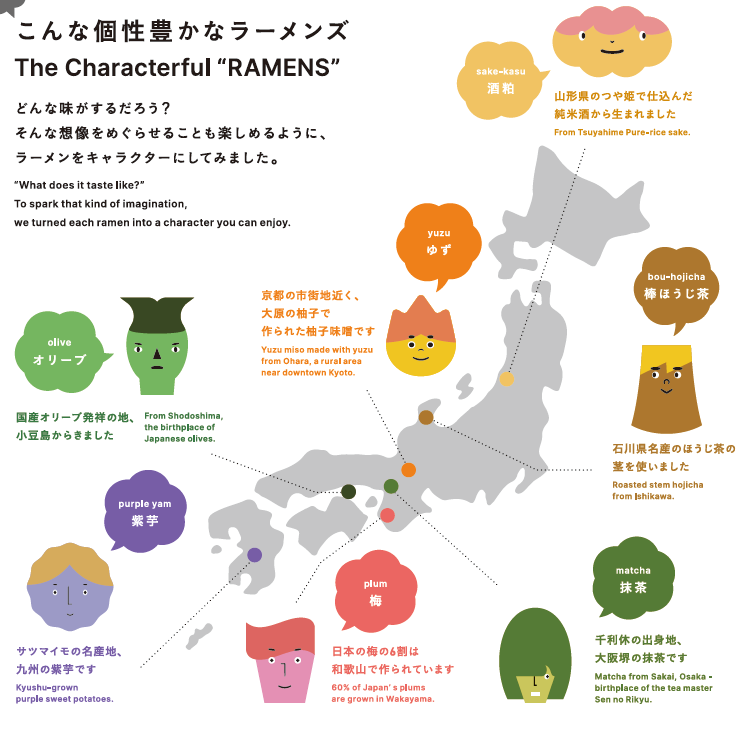
What we focused on was the fact that every region has its own distinctive ingredients. By working with vegetables, fruits, teas, fermented foods, and other local specialties, it should be possible to create ramen that represents each region. Based on this idea, we selected ingredients from seven regions and brought seven original ramen concepts to life at Expo 2025.
A key role in this process is played by MIRACORE®’s plant-based soup base, which enhances the natural flavors of local ingredients without overpowering them.
By keeping the aroma subtle, while delivering the richness and satisfaction typically associated with animal-based ramen, we developed a prototype soup base capable of “converting” a wide range of plant-based ingredients into ramen.
The seven local ingredients selected for THE RAMENS were:
Sake-kasu(lees) from Yamagata, bou-hojicha(roasted tea) from Ishikawa, yuzu miso from Kyoto, purple yam from Kyushu, plum from Wakayama, olive pickles from Shodoshima (Kagawa), and matcha from Sakai, Osaka.
THE RAMENS Workshop at Expo 2025
At Expo 2025 Osaka, Kansai, THE RAMENS was presented as a hands-on workshop designed to let participants enjoy discovering unfamiliar ramen flavors.
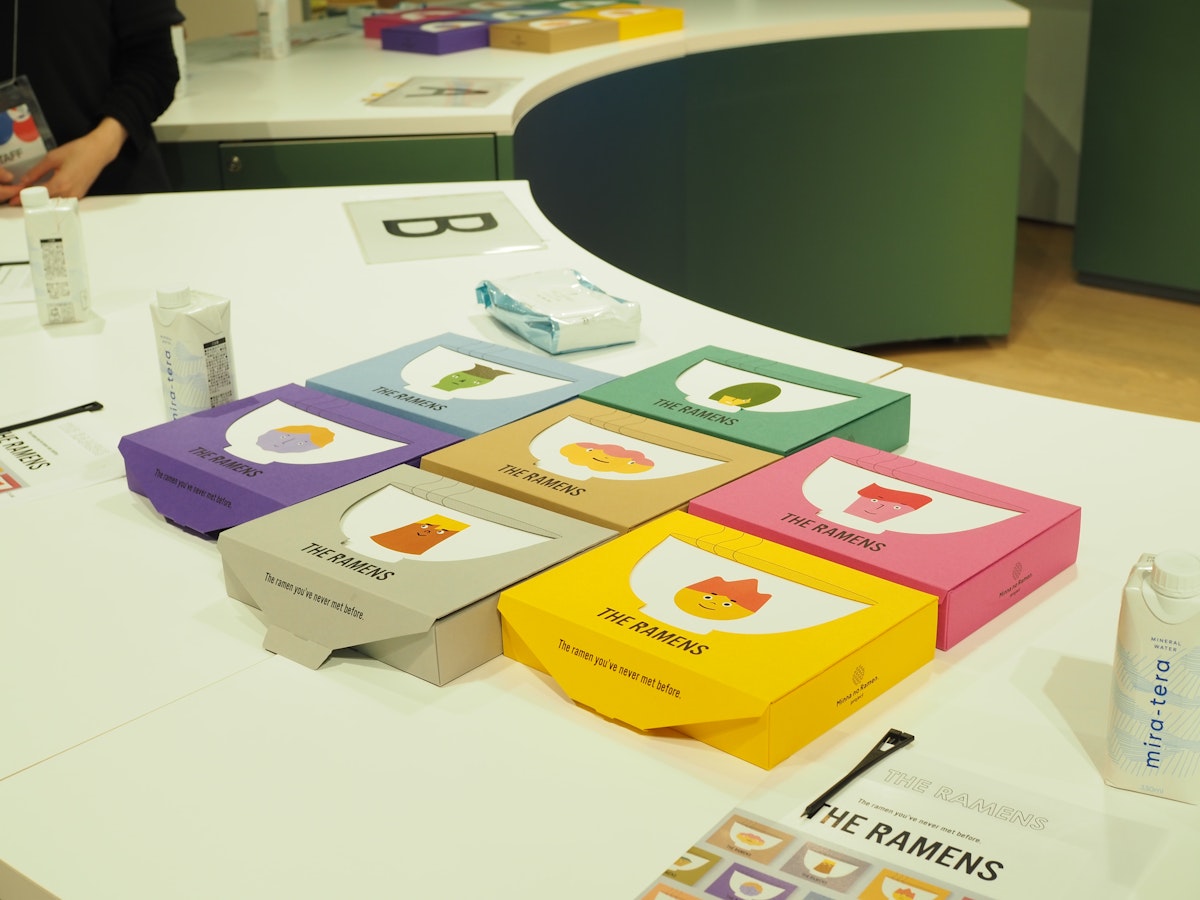
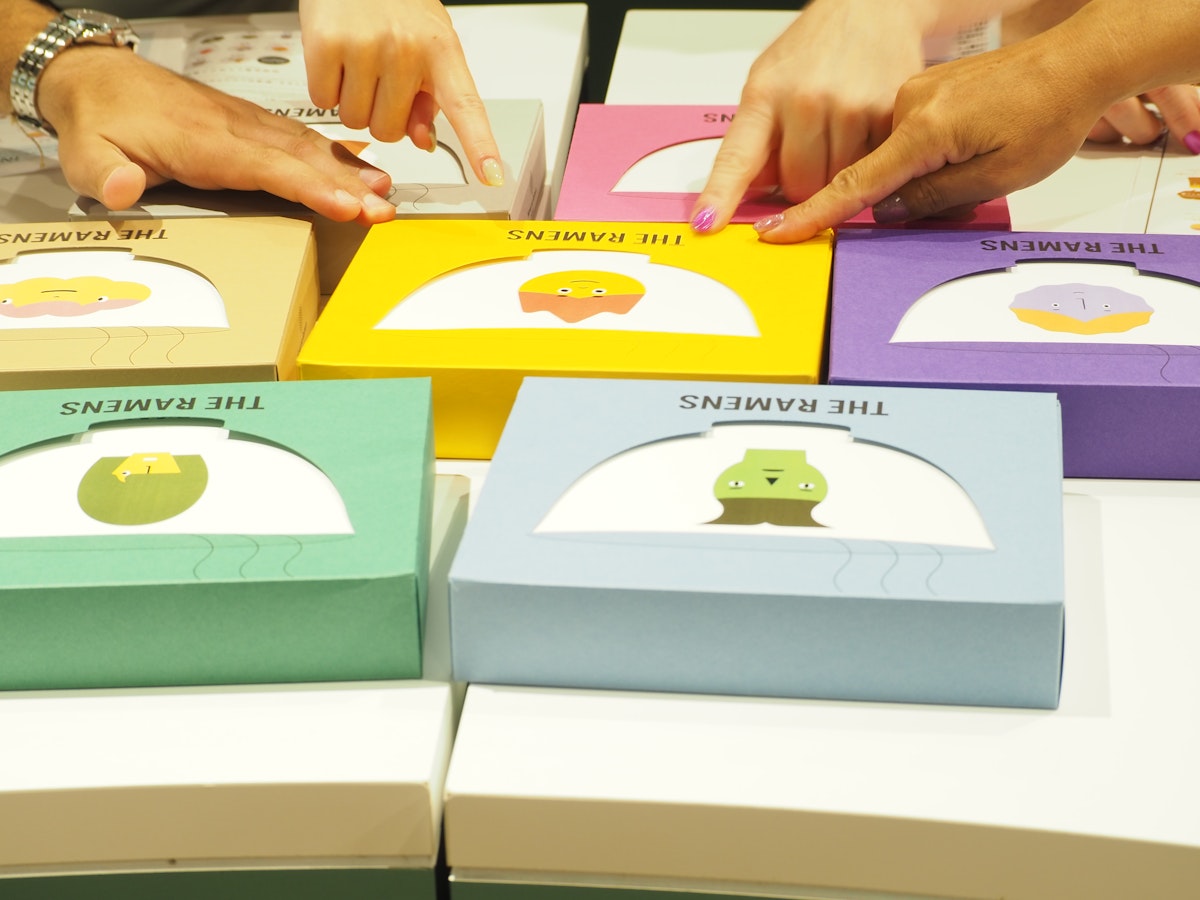
Participants were seated in groups of four, with seven colored boxes placed on each table—each box representing a different ramen. To help participants move beyond preconceived ideas about ingredients such as sake lees or olives, each ramen was given its own character, and participants were asked to imagine the flavor based on the character design and box color.
While discussing their impressions within each group, participants selected one “favorite” ramen to taste.
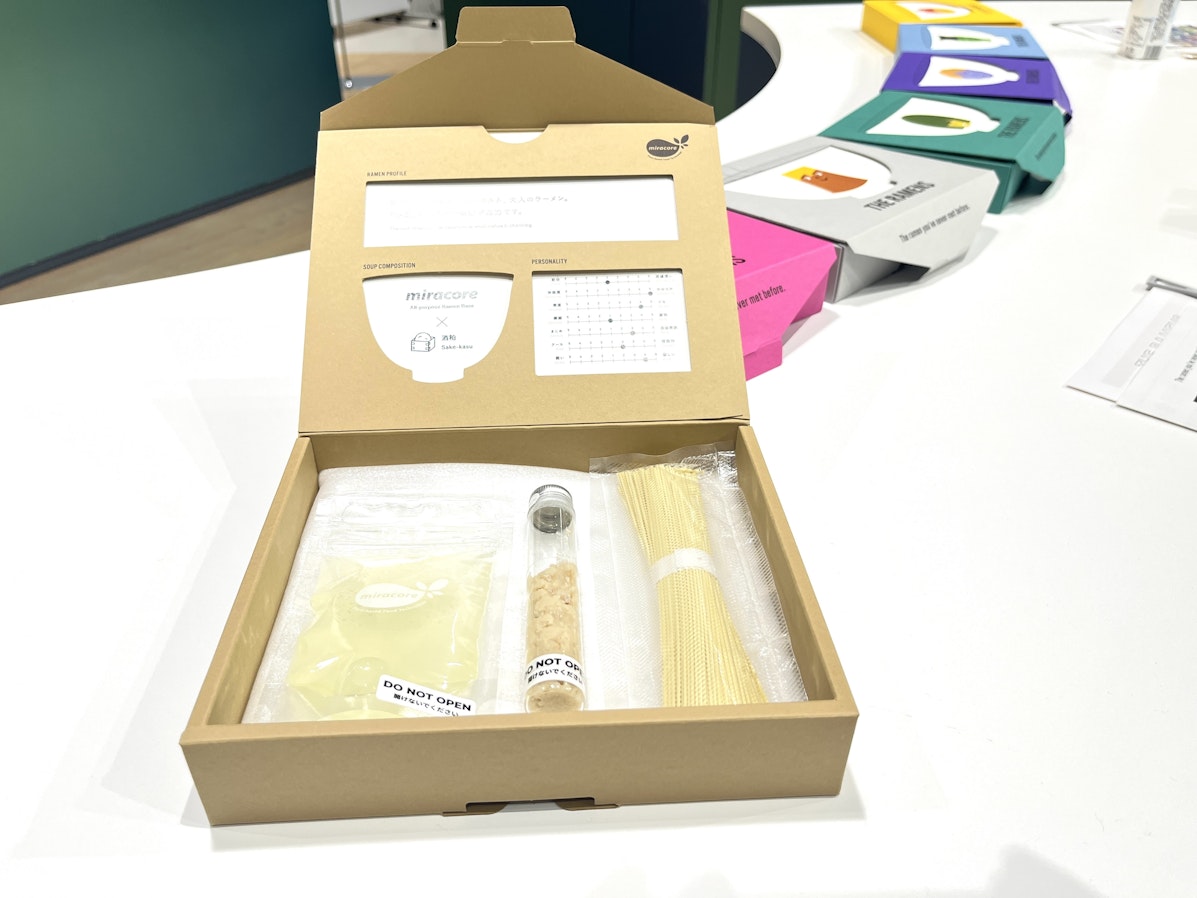
When the boxes were opened, the local ingredients—presented in test tubes—were revealed, creating moments of surprise and excitement throughout the venue.
Some groups chose their ramen based on the character design, while others were drawn to the uniqueness of the ingredients.
Comments like “I like the pink character!” and “I’ve never seen purple ramen before!” filled the room as participants animatedly discussed their choices within each group.
In one group, the final choice came down to sake lees versus hojicha.
At sessions that included overseas participants, however, every group chose yuzu-miso —an unexpected result.
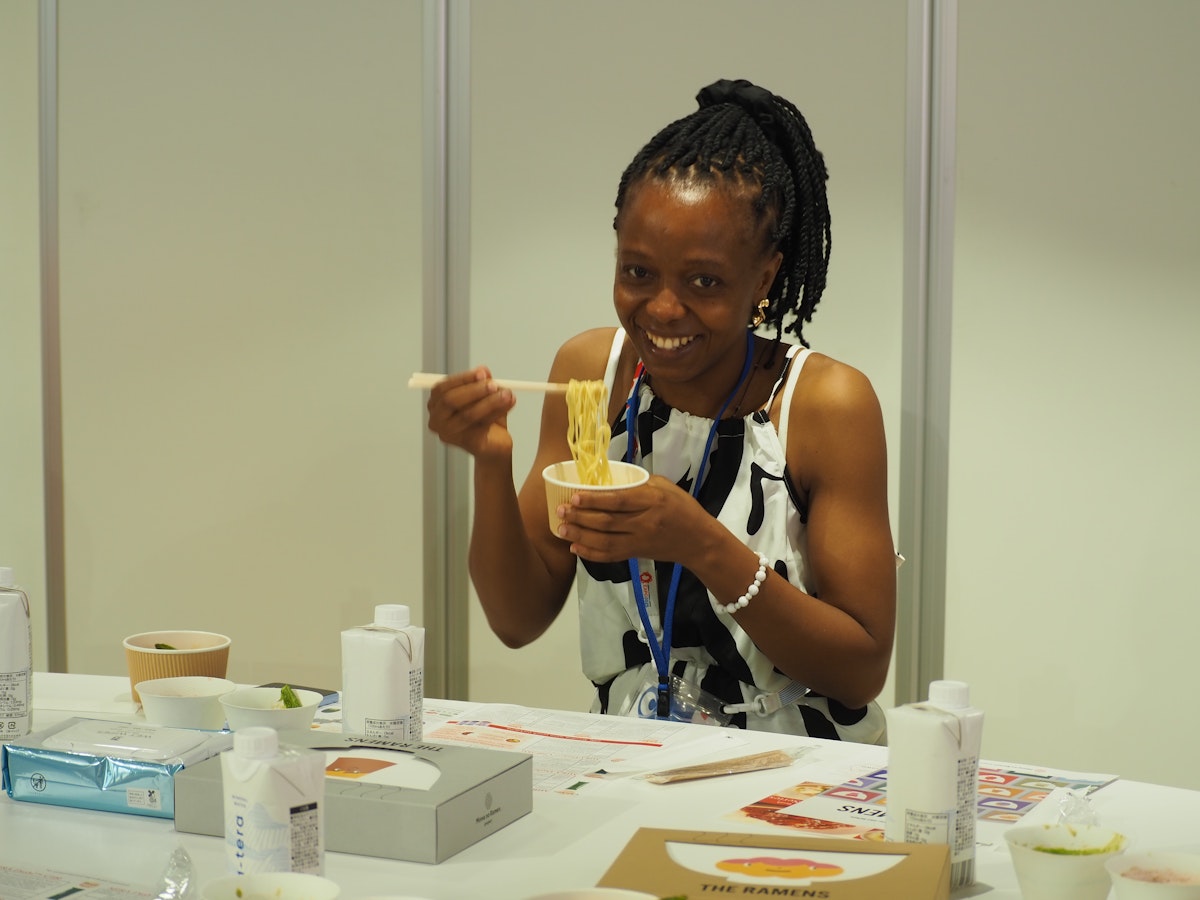
Participants came from a wide range of countries, including Hungary, China, and Vietnam. Interestingly, when experienced as ramen, yuzu proved more popular than matcha.
The flavor preferences selected by both domestic and international participants provided valuable insights for future expansion of THE RAMENS in Japan and overseas.
“Please Sell This!” — Voices from Participants
Following the workshop, many participants expressed a strong desire to see THE RAMENS offered beyond the event, with comments calling for the ramen to be sold or developed into a restaurant concept.
Reactions such as “This was fascinating—I wish I could have tried all seven!” and “If this were a shop, it would definitely be popular” captured the excitement felt by participants as they reflected on their experience.
Others commented on the appealing character designs and packaging, noting that the combination of visual playfulness and flavor made the ramen feel approachable and memorable.
Beyond enjoyment, the experience also prompted new perspectives on plant-based foods. Some participants shared that the richness of the soup made them feel reassured about a future with fewer animal-based ingredients, while others spoke about the significance of being able to enjoy the same meal regardless of cultural or religious background.
Through THE RAMENS, many participants found their preconceptions about plant-based food gently overturned, leaving them with a more positive and hopeful impression of what plant-based cuisine can offer.
Expanding THE RAMENS (1): The Africa Edition
On September 8, an Africa Edition of THE RAMENS was held as part of a collaborative program with the Nikkei Minami-Osaka REBORN Consortium.
Under the supervision of Professor Oussouby SACKO, former President of Kyoto Seika University, a special ramen was developed using Soumbala—a fermented food commonly enjoyed in Africa—as the featured local ingredient.
Nine participants from African countries took part in the tasting, and the response was immediate and enthusiastic, with many asking for second servings.
Japanese participants who joined the session also shared their surprise, commenting that although the flavor was unfamiliar, it was “strangely addictive.”
Africa is home to a wide range of religious and cultural traditions, including Islam, Christianity, and indigenous belief systems. Being able to share the same meal with peace of mind—and to say “delicious” together—highlighted the inclusive potential of plant-based ingredients.
This session demonstrated that THE RAMENS is not limited to Japan, but can be adapted and embraced in diverse cultural contexts around the world.
Expanding THE RAMENS (2): Toward Product Development
Following Expo 2025, THE RAMENS has continued beyond the event through a series of study sessions and workshops.
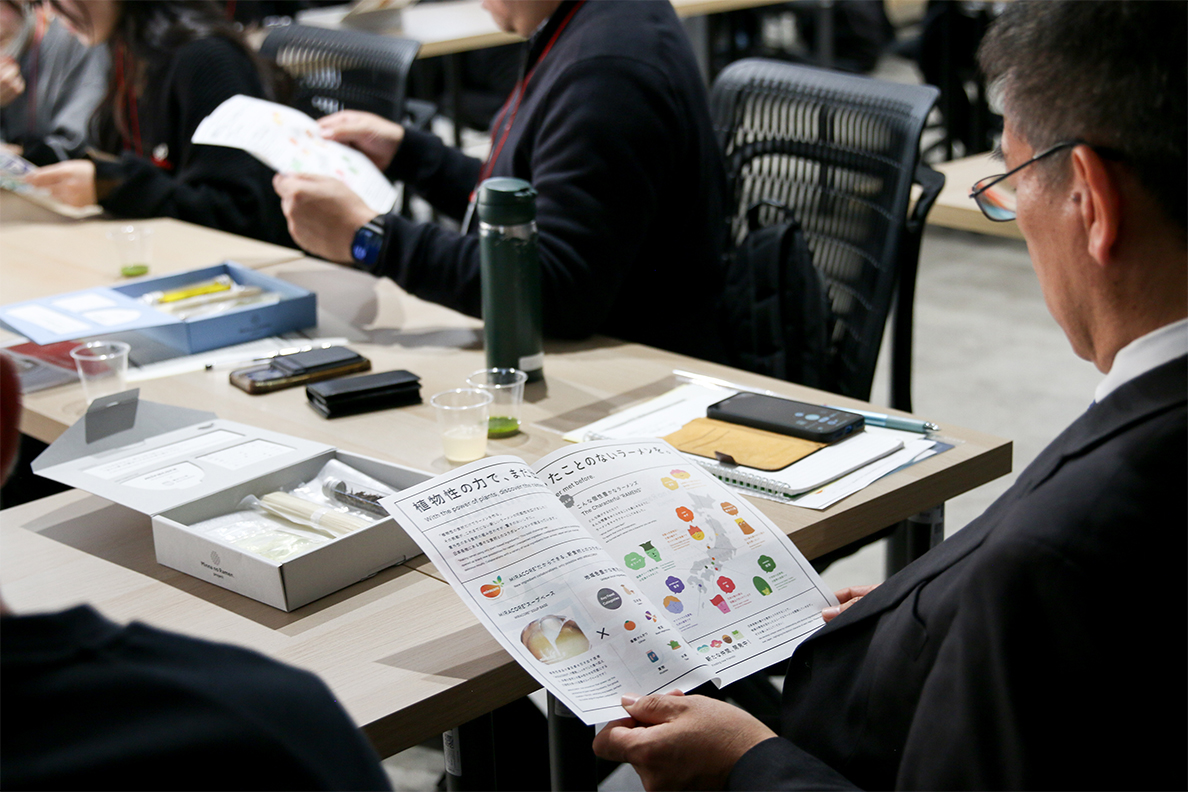
On November 20, the project was introduced at a training session hosted by the Kyoto Food Business Platform’s Export Subcommittee. Around 30 food-related business operators and stakeholders experienced all seven soup variations firsthand, exploring how local ingredients could be translated into ramen.
As a result, new co-creation projects using ingredients from Kyoto have already begun to take shape.
Moving forward, THE RAMENS aims to go beyond providing experiential opportunities and accelerate collaboration with local ingredient holders nationwide, with an eye toward commercialization.
What began as an experiment at Expo 2025 now points toward what comes next.
Together with regional ingredients, THE RAMENS will continue exploring new possibilities for ramen.
![[EXPO 2025 Report] THE RAMENS and the Legacy of Expo](https://images.microcms-assets.io/assets/b5600ab28de24721b5fc5ec785cc7b65/1c50eeb755ed419a9ca591f6877a1be3/theramens_collage2_ps.jpg)